
WELCOME TO THE IMAGE NOVEMBER 2026 MEETING!
IN MEMORY OF PROFESSOR MARTIN SAVAGE
Dear Delegate,
We are delighted to welcome you to the Insights into MAnaging Growth for Endocrine nurses (IMAGE) Meeting, organised by Springer Health+ IME. This year’s meeting will take place on 5–6 November 2026 in the beautiful and historic city of Seville, Spain.
We begin this year’s meeting by honouring the memory of Martin Savage, who served as Programme Director of IMAGE since its inception and sadly passed away earlier this year. Martin was not only a driving force behind the creation and growth of this programme, but also a deeply respected colleague, mentor, and friend to many within the paediatric endocrine community. His generosity, curiosity, and unwavering dedication to nurse education shaped IMAGE into the meeting it is today.
This year’s programme holds special significance, as it was conceived by Professor Savage himself, reflecting the themes and learning priorities he felt were most relevant for advancing paediatric endocrine nursing practice. We are profoundly grateful for his leadership and the lasting impact he made on colleagues, faculty, and delegates throughout his life.
Now in its 12th year, IMAGE continues its commitment to providing practical, high‑quality clinical education for nurses working in paediatric endocrinology. Building on more than a decade of shared learning and collaboration, the 2026 programme will explore key themes including the neonatal presentation of endocrine disorders, the longer‑term effects of genetic endocrinopathies, therapeutic decision‑making through an interactive Nominal Group Technique (NGT) workshop, and the long‑term consequences and management of differences of sexual development. The meeting will feature plenary lectures, case‑based discussions, Q&A sessions, and the NGT workshop , all designed to support open exchange, peer learning, and practical skill development.
We hope you find IMAGE 2026 both informative and inspiring, and that it provides valuable insights and meaningful connections to support your clinical practice.
Warm regards,
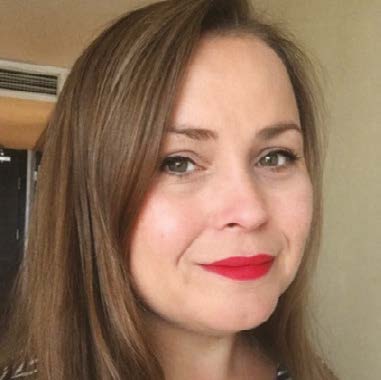
Kate Davies

Chair
EDUCATIONAL GRANT
This independent programme is made possible thanks to an educational grant received from Merck KGaA, Darmstadt, Germany.
ORGANISERS
This educational activity has been planned and independently implemented by Springer Health+ IME. Springer Health+ IME is the independent medical education group of Springer Health+, part of the Springer Nature publishing group.
Springer Health+ Independent Medical Education
Project Manager: Alexandros Marantzidis
T +44 (0) 74 4325 8019
[email protected]

LOGISTIC PROVIDER
Med.E.A – Medical Education Academy
Phone: +39 02 8295 8658
Email: [email protected]
CONTINUING MEDICAL EDUCATION
An application for CME accreditation will be made to the International Council of Nurses (ICN).
PROGRAMME
THURSDAY 5 NOVEMBER
Welcome and introduction
09:00–09:30 – Kate Davies & Paul Dimitri, UK
Session 1: Neonatal presentation of endocrine disorders
Moderators: Kate Davies & Paul Dimitri
09:30–09:50 – Hyperinsulinism
Pratik Shah, UK
09:50–10:10 – Hypopituitarism
Paul Dimitri
10:10–10:25 – Case Study: Hypopituitarism/Optic Nerve Hypoplasia
Irena Hozjan, Canada
10:25–10:40 – Session 1 Q&A
All
10:40–11:10 – MORNING COFFEE BREAK
Session 2: Longer term effects of genetic endocrinopathies
Moderators: Kate Davies & Li Chan
11:10–11:30 – Congenital Adrenal Hyperplasia (CAH)
Kate Davies
11:30–11:50 – Cortisol Deficiency (exluding CAH)
Li Chan, UK
11:50–12:20 – Interactive Case Study
Kate Davies & Li Chan
12:20–12:30 – Session 2 Q&A
All
12:30–13:30 – LUNCH BREAK
Session 3: Nominal Group Technique (NGT) Workshop - Therapeutic decision making
Chair: Paul Dimitri
Moderator: Octavio Rivera Romero, Spain
13:30–14:30 – NGT-workshop activities 1-3
14:30–15:00 – COFFEE BREAK
15:00–16:00 – NGT-based workshop activities 4-5
16:00–16:30 – Day 1 roundup and close
Paul Dimitri
FRIDAY 6 NOVEMBER
Session 4: Long-term consequences of differences of sexual development
Moderators: Kate Davies & Paul Dimitri
09:00–09:10 – Introduction to day 2
Kate Davies
09:10–09:40 – NGT Workshop Summary and Consensus vote
Paul Dimitri
09:40–10:00 – Normal and Abnormal Sex Development
Kate Davies
10:00–10:30 – Long-term Management of Differences of Sexual Development
Martine Cools, Belgium
10:30–10:50 – MORNING COFFEE BREAK
10:50–11:05 – Case study: Differences of Sexual Development
Robin Heyse, Belgium
11:05–11:25 – Cases from the Adolescent Gynaecologic Clinic
Louise Perry, UK
11:25–11:45 – Discussion & Q&A
All
11:45–12:15 – Keynote Lecture: Long-term Consequences and Transitional Care of Patients with Turner’s Syndrome
Irene Hozjan
11:45–12:15 – Session 4 Q&A
All
Closing Remarks Day 2
12:30–12:45 – Summary and close
Paul Dimitri
12:45–14:00 – LUNCH
VENUE AND LOCATION
CONFERENCE VENUE
The meeting and delegate accommodation are at the Meliá Lebreros in Seville, Meliá Lebreros.
INFORMATION FOR DELEGATES
FOR ANY LOGISTICS INQUIRIES ONSITE, PLEASE CONTACT:
Marta Pani (mobile phone: +39 3519336191; email: [email protected])
ORGANISING COMMITTEE
KATE DAVIES
Senior Lecturer in Children’s Nursing, London South Bank University, London, UK
Kate Davies has been a children’s nurse since 1994, working in general paediatrics, paediatric ICU and neuroscience before specialising in paediatric endocrinology in 2000. She has focused on advancing her education by studying for a BSc (Hons) in Psychology, an MSc in Occupational Psychology and an MSc in Professional Healthcare Research, as well as advancing clinical skills including Non-Medical Prescribing. She is also a qualified Children’s Advanced Nurse Practitioner and a Nurse Teacher. Kate is well known internationally within paediatric endocrinology, having presented and published widely. She has sub-specialised in growth and puberty, neuro-endocrine late effects of childhood brain tumours, adrenal disorders and differences of sex development. Kate commenced her PhD in Nursing in 2021, focusing on monitoring in young people with congenital adrenal hyperplasia. Kate is passionate about educating staff and students, and started at London South Bank University, as a Senior Lecturer in Children’s Nursing in September 2015. She launched the new BSc/MSc module ‘Principles of care for the child and young person in endocrinology’ in January 2017, and has run four successful intakes, with a 100% pass rate each time and another currently underway. She leads the UK’s only paediatric Non-Medical Prescribing programme, and is Associate Professor in Paediatric Prescribing and Endocrinology.
PAUL DIMITRI

Professor of Child Health Technology at the University of Sheffield and Professor of Child Health at Sheffield Hallam University, Sheffield, UK
Paul currently works at Sheffield Children’s NHS Foundation Trust (UK) as a Consultant in Paediatric Endocrinology and the Director of Innovation and Child Health Technology. He is Professor of Child Health Technology at the University of Sheffield, and Professor of Child Health at Sheffield Hallam University. Paul is Vice President for Science and Research at the Royal College of Paediatrics and Child Health, Director of the NIHR HealthTech Research Centre in Paediatrics and Child Health (UK) and the Clinical Director for the National Technology Innovation Transforming Child Health (TITCH) Network. Paul has led on the development and implementation of national technology networks that specifically focus on the development and adoption of technology for paediatrics and child health through private and public sector collaboration. Since 2014, these networks have leveraged over £50 million, and he is currently leading the development of the £24 million National Centre for Child Health Technology in Sheffield. Paul is committed driving the development of health technology for children in collaboration with industry partners and ensuring that paediatric science and research is prioritised by national funding bodies, to support the best health and healthcare for children and young people.
MARTIN SAVAGE
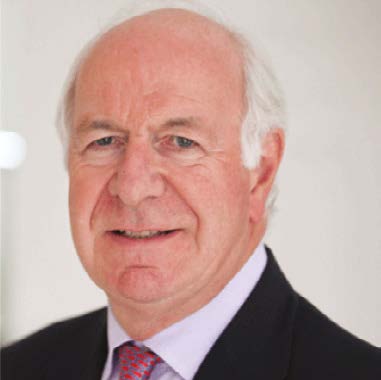
Emeritus Professor of Paediatric Endocrinology at William Harvey Research Institute, Barts and the London School of Medicine & Dentistry, London, UK
Martin Savage was an Emeritus Professor of Paediatric Endocrinology at William Harvey Research Institute, Barts and The London School of Medicine and Dentistry, Queen Mary University of London. He was head of the Paediatric Endocrine Unit at Barts and the London School of Medicine from 1982 to 2007. He was interestsed in growth disorders, specifically those with abnormalities in the growth hormone (GH)-IGF-1 axis and in phenotype-genotype relationships of GH-IGF-1 axis defects, notably GH resistance. He published the first human case of an IGF-1 gene defect in The New England Journal of Medicine in 1996. His other interests were Cushing’s syndrome and growth in chronic inflammatory diseases. He was General Secretary of the European Society for Paediatric Endocrinology (ESPE) from 1997 to 2004. He had lectured in 61 countries and has published 472 original articles, reviews, textbook chapters and books. In 2007, he was awarded the ESPE Andrea Prader Prize for contributions to paediatric endocrinology and in 2018 he received a Visionary Award from the American Human Growth Foundation. In 2022, he received a Research Excellence Award from the Dr Sulaiman Al Habib Medical Journal in Riyadh, and the British Society of Paediatric Endocrinology & Diabetes James M. Tanner Lifetime Achievement Award.
SPEAKER BIOGRAPHIES
LI CHAN
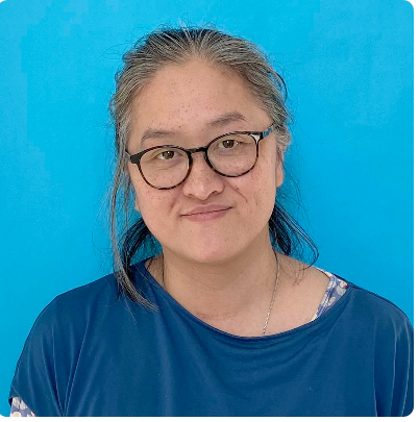
Professor of Molecular Endocrinology and Metabolism at William Harvey Research Institute, Queen Mary University of London, London, UK
Professor Li Chan runs a laboratory investigating molecular mechanisms in adrenal and metabolic conditions in children. She is a consultant Paediatric Endocrinologist at Barts Health and runs clinics in paediatric endocrinology, with a special interest in paediatric adrenal insufficiency and paediatric obesity, at the Royal London Children’s Hospital. She has been the adrenal faculty lead on the US Endocrine Society’s Paediatric ESAP training programme for 5 years, was co-lead of Genomics England GeCip in Endocrinology and Metabolism and has presented and taught on a number of education programmes.
MARTINE COOLS
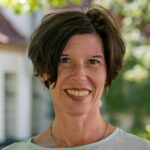
Professor of Paediatric Endocrinology, Ghent University Hospital, Ghent, Belgium
Her main research focuses on gonadal development, clinical management and cancer risk in DSD. She has been actively involved in several collaborative European research projects and networks. She supervised 10 PhD students and (co-)authored more than 150 original papers.
Martine Cools received the ESPE Young Investigator Award in 2010 and the Price Luc Broeckaert for medical scientific research in 2020. She was awarded an ESPE Research Fellowship grant in 2003.
Martine Cools is ESPE representative in the ESE-ESPE EndoCompass project steering group. She has been chair of the ESPE Science Committee and member of ESPE Council (2021-2024). She has been the paediatric chair of the Endo-ERN Science and Research Committee (2017 – 2022).
Martine Cools regularly acts as a counsellor for the Belgian government in matters related to DSD and transgender healthcare. She has optimal contacts with several patient organisations, and is a scientific advisor for the Belgian adrenal insufficiency patient advocate group.
ROBIN HEYSE

Psychologist, Ghent University Hospital, Ghent, Belgium
IRENA HOZJAN

Nurse Practitioner, SickKids, Toronto, Canada
LOUISE PERRY
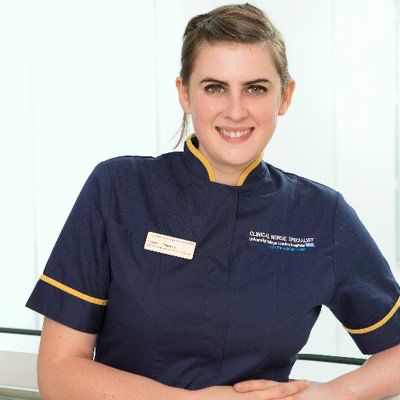
Clinical Nurse Specialist, UCL, London, UK
Louise (she/her) is a clinical nurse specialist; she is a trained paediatric and young people’s nurse. She has experience in working in acute settings with children and young people, in operating theatres and in sexual health. Since 2015 she has worked at UCLH- her areas of speciality include differences of sex development, adolescent menstrual dysfunction, complex congenital gynaecology and paediatric female genital cutting/ mutilation. Louise is also a trained psychodynamic counsellor.
OCTAVIO RIVERA ROMERO
Associate Professor , Department of Electronic Technology, University of Seville, Seville, Spain
PRATIK SHAH
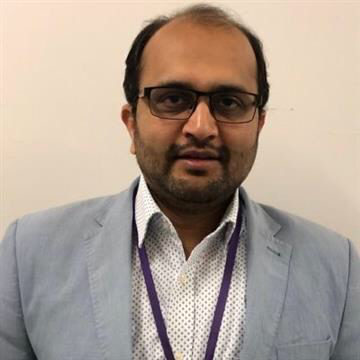
Consultant in Paediatric Endocrinology and Diabetes and Honorary Senior Clinical Lecturer, Barts Health NHS Trust and Queen Mary University of London, London, UK
Pratik is a Consultant in Paediatric Endocrinology/Diabetes and Honorary senior lecturer. He did his PhD in the field of Congenital Hyperinsulinism and has special interest in managing children with all forms of glucose disorders (rare & syndromic forms of hypoglycaemia/diabetes, congenital hyperinsulinism and ketotic hypoglycaemia) and has led the highly specialised NHS England service. He also specialises in managing children with severe obesity and is part of multidisciplinary team for bariatric surgery. His research includes identifying and understanding molecular basis of non-diabetic hypoglycaemia including novel therapies. He has been speaker at various international/national meetings and primary investigator for various investigational studies/clinical trials. He has over 75 scientific publications in peer-reviewed journals, over 150 abstract presentations as well as written book chapters on Hypoglycaemia in Children & Paediatric Obesity. He has been working with parent organisations nationally/internationally. He serves as a Patron for the Childrens Hyperinsulinism UK charity and is a senior scientific advisory board member for Ketotic Hypoglycaemia international and Congenital Hyperinsulinism International. He is the founder and chairman of Congenital Hyperinsulinism India Association(CHIA), a non-profit organisation working to improve lives of children and families. He is member of Clinical Practice Committee at European Society of Paediatric Endocrinology(ESPE).
AIMS AND LEARNING OBJECTIVES
Learning objectives
General Learning Objectives
Having taken part in the meeting, learners will be able to:
- Understand that many endocrine disorders present at birth
- Understand that neonatal endocrine disorders may be inherited from parents with or without endocrine
disorders, depending on whether there is a dominant or recessive mutation - Recognise that the severity of illness is dependent on the nature of the genetic alteration
- Become familiar with key neonatal endocrine disorders and their complications
Session 1 Learning Objectives:
Having attended the session, learners will understand:
- The causes, presentation and treatment of hyperinsulinism, hypopituitarism and congenital adrenal hyperplasia
Session 2 Learning Objectives:
Having attended the session, learners will understand:
- That hormone therapy for genetic endocrinopathy requires regular monitoring and adjustment over a
child’s developmental stages. - Recognise common complications of genetic endocrinopathies and related therapy that may develop
in hyperinsulinism, hypopituitarism, and cortisol deficiency
Session 3 Learning Objectives:
Having attended the session, learners will understand:
- Identifying priorities in therapeutic decision making
Session 4 Learning Objectives:
Having attended the session, learners will understand:
- Differences of sexual development (DSD) are a group of rare conditions where there are atypical genitalia in relation to a person’s chromosome or gonads
- DSDs may be diagnosed at birth, childhood, adolescence or adulthood
- DSDs may be caused by genetic mutations that affect hormone production or response, or by a difference in the number of sex chromosomes
- The causes, diagnosis and management of DSDs and Turner’s syndrome